


React to the current traffic situation in real time and minimize traffic jams: The regional traffic management center makes it possible. Instead of more roads, the Verband Region Stuttgart is focusing on intelligent traffic control and management. Traffic does not respect municipal boundaries. This is why the VRS has initiated a cooperation between cities, districts and the state.
The Verband Region Stuttgart and its cooperation partners have received EU funding for the regional mobility platform from the state competition RegioWIN. The project volume amounts to around EUR 9.5 million. The EU and the state of Baden-Württemberg are providing around EUR 5.6 million for this.
Project participants
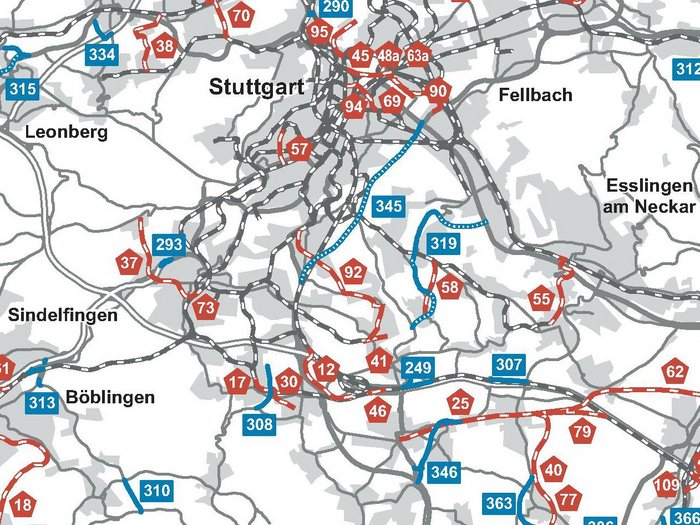
Starting from the most heavily frequented area in the region, four pilot corridors around Stuttgart have been set up to jointly develop solutions to existing traffic problems, congestion and overloads. The cities of Böblingen, Esslingen, Filderstadt, Leinfelden-Echterdingen, Ostfildern, Ditzingen, Fellbach, Leonberg, Ludwigsburg, Remseck and Waiblingen and the districts of Böblingen, Esslingen, Ludwigsburg and Rems-Murr-Kreis decided to participate in regional traffic management and signed the cooperation agreement on October 10, 2022.
The state capital Stuttgart, represented by the Integrated Traffic Management Center (IVLZ), and the state of Baden-Württemberg are also involved in the regional mobility platform. The traffic management experience of these institutions contributes significantly to cross-authority traffic management in the Stuttgart region. For example, the state of Baden-Württemberg operates the cooperative traffic control center at the location of the Baden-Württemberg Mobility Center together with Autobahn GmbH. The cooperative traffic control center is operationally integrated into the regional mobility platform.
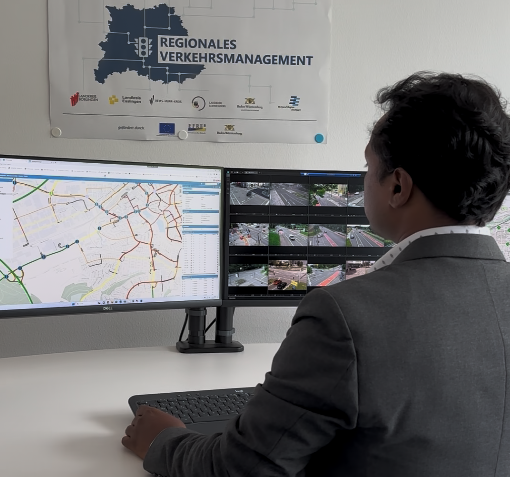
Regional traffic management center (ring center)
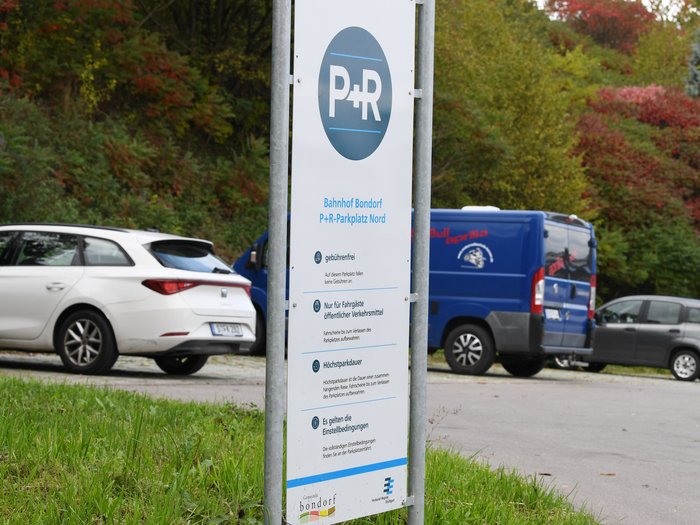
In the cities of Böblingen, Leonberg, Ditzingen, Fellbach and Waiblingen, control strategies can be initiated from the new regional traffic management center and called up in situation-specific traffic light circuits. Information about roadworks and free P+R parking spaces, such as in Bondorf, Kirchheim (Neckar) and Neustadt-Hohenacker, is also available in the regional traffic management center and can be used by the city and district administrations as a basis for planning.
The mobility platform is thus developing into a qualified exchange platform for mobility information on the region's roads. The scope of the "Regional Traffic Management Center" is not yet complete in its current form. Other municipalities can join the cooperation agreement and benefit from the facility.
The partners and their measures
In addition to the state capital Stuttgart, seven cities and districts have participated as operational partners in regional traffic management as part of the pilot project. To this end, traffic light systems are being upgraded and their programs made more efficient. They can also be connected to the future regional traffic management center via a new regional traffic computer if they were not previously networked. The measures are being subsidized with funds from the regional mobility platform funding project. The measures of the individual partners at a glance:
Böblingen district
In the district of Böblingen, the measures are mainly located at junctions along the K 1077 - Herrenberger Straße in the Böblingen corridor and along the K 1011 - Südrandstraße in the Leonberg corridor, where the district is responsible for road construction. The district of Böblingen is involved in five strategies in the Böblingen corridor and six strategies in the Leonberg corridor.

Back to overview Mobility