


Bringing the region closer together
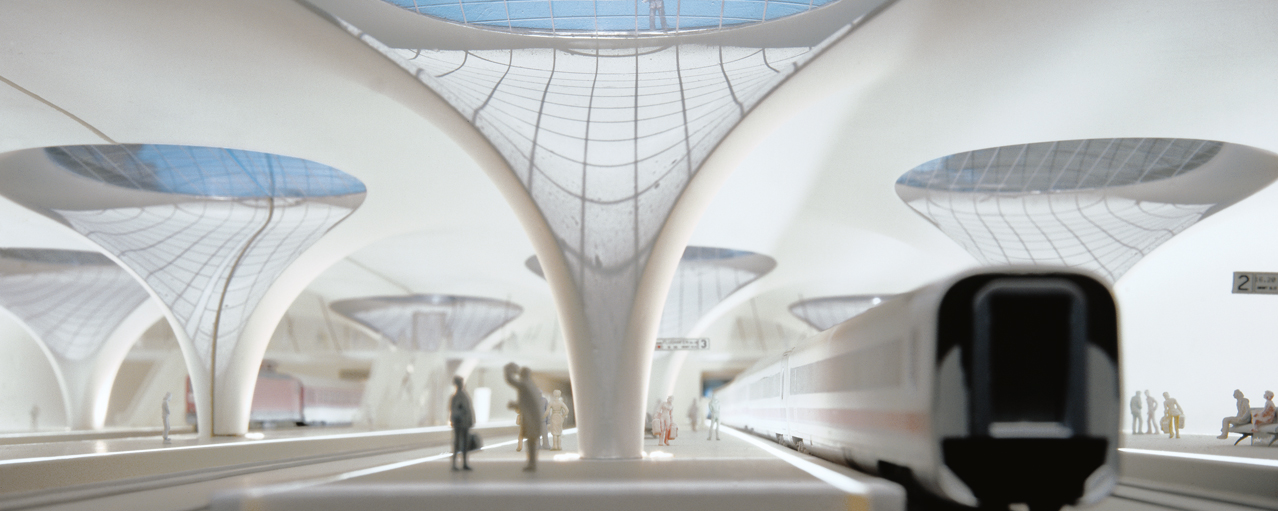
Being a metropolitan region is both a challenge and an obligation: people must be able to get from A to B quickly and without disruption, and central hubs such as the airport, railway station and trade fair centre must be quickly and easily accessible. Stuttgart 21 plays an important role here. However, people in Stuttgart and the region can not only look forward to a fast direct connection to the Filder region, many faster direct connections are also crucial for the region, for example to get from Ludwigsburg to Esslingen or from Herrenberg to Waiblingen. The region is moving closer together - and public transport is getting even better.
The Stuttgart Region Association and Stuttgart 21

The Stuttgart Region Association is investing in those aspects of the Stuttgart 21 project that will help improve local transit in the region. These include the future separation of the S-Bahn line between Bad Cannstatt and the main station, the new Mittnachtstraße S-Bahn station, the routing of regional trains via the airport, the expansion of the airport into a mobility hub, and the Wendlingen Curve. The Stuttgart Region Association is contributing 100 million euros toward these measures. The regional contribution is capped and specified in the Stuttgart 21 financing agreement.
As with many other large-scale projects, the Stuttgart 21 project is also facing delays in completion due to implementation issues. A new commissioning plan was presented in mid-2026. The massive delays in commissioning are setting back the development of public transit in the Stuttgart region by at least half a decade, if not a full decade. In light of these serious negative consequences, the Transportation Committee insists that the time resulting from the delay must now be used to achieve improvements for passengers.
Demands:
- Stuttgart 21 must be fully implemented in accordance with the contract
- Component 3 of the Stuttgart Digital Hub must be fully implemented
- The optimization of the planned commissioning process must be organized intelligently,
- A qualitatively new and reliable alternative transit service must be established
- The existing infrastructure must remain available with as few disruptions as possible and without interruption for as long as it is still needed
- Access to the main station must be significantly improved
- Regional expansion projects must be accelerated
- Focus on passengers
- The Stuttgart Region Association expects reliability, transparency, and speed. Passengers must not be the ones to suffer the consequences of further delays.
Pfaffensteig Tunnel
To implement the Germany-wide integrated train schedule, a major expansion of the line from Stuttgart to Singen is also planned. A key component is the so-called Pfaffensteig Tunnel between Böblingen and the airport. This tunnel replaces the previous plans under the Stuttgart 21 project for the connection toward Böblingen. The tunnel will enable shorter travel times and will play a key role in ensuring that the S-Bahn between Vaihingen and the airport can continue to operate on its own tracks. Once the tunnel is completed, the airport hub will therefore become significantly more attractive—particularly for passengers traveling from the south—compared to the previous plans. Completion is currently scheduled for late 2033.

Stuttgart 21 is a complex project. In order to introduce the project and its impact to the general public, all of the funding partners for the project have invested in an exhibition building called InfoTurm Stuttgart or ‘ITS’ for short on Platform 16 at Stuttgart’s main station (Hauptbahnhof). Over three floors and a viewing platform, the exhibition provides information about the Stuttgart-Ulm rail project as well as related future developments. Using numerous digital exhibits in conjunction with large-scale graphics, augmented reality and immersive 3D exhibits, the ITS team invites visitors to get to know Stuttgart 21 better.